Tag: technology
-

How Manufacturers Can Turn Data Into Actionable Insights
Manufacturing plants generate massive amounts of data every day. From machine performance and production output to quality inspections and inventory movement, every process creates valuable information. Yet, many manufacturers struggle to convert this data into meaningful actions that improve productivity and profitability. Collecting data alone isn’t enough. The real advantage comes from transforming raw information…
-

How ERP and Real-Time Plant Data Can Work Together
In today’s competitive manufacturing landscape, businesses need more than just an Enterprise Resource Planning (ERP) system to stay ahead. While ERP software efficiently manages business processes such as inventory, procurement, finance, and production planning, it often lacks one critical component—real-time visibility into what’s happening on the shop floor. This is where real-time plant data bridges…
-

How Real-Time Machine Monitoring Reduces Unexpected Downtime test
In today’s competitive industrial environment, unplanned equipment downtime can significantly impact productivity, profitability, and customer satisfaction. Whether in manufacturing, logistics, mining, energy, or warehousing, unexpected machine failures often lead to production delays, increased maintenance costs, and missed business opportunities. This is where Real-Time Machine Monitoring plays a crucial role. Real-time machine monitoring uses sensors, IoT…
-

Companies are drifting away from AI due to increasing processing costs
Artificial Intelligence (AI) has become one of the most talked-about technologies of the decade. Businesses across industries have invested heavily in AI-powered tools to automate processes, improve decision-making, and gain a competitive edge. However, despite the excitement surrounding AI, many companies are beginning to reconsider their investments due to a growing concern: increasing processing costs.…
-

Why Manufacturers Need Workflow Digitization Beyond ERP
Enterprise Resource Planning (ERP) systems have long been the backbone of manufacturing operations. They help organizations manage inventory, procurement, finance, production planning, and supply chains from a centralized platform. However, as manufacturing environments become more complex and data-driven, relying solely on ERP systems is no longer enough. Modern manufacturers need workflow digitization beyond ERP to…
-

How Truck Volume Detection Improves Material Handling Accuracy
In industries such as mining, construction, logistics, and manufacturing, accurate material handling is critical for operational efficiency and profitability. Even small inaccuracies in measuring transported materials can lead to inventory mismatches, increased operational costs, delivery disputes, and reduced productivity. This is where truck volume detection technology is transforming modern industrial operations. Truck volume detection systems…
-

How Conveyor Belt Monitoring Prevents Costly Production Interruptions
In modern industrial environments, conveyor belts are the backbone of material handling systems. From mining and manufacturing to logistics and food processing, these systems ensure seamless movement of goods across production stages. However, even a minor fault in a conveyor belt can lead to significant downtime, operational inefficiencies, and financial losses. This is where conveyor…
-
How Smart Manufacturing Improves Margins Without Major Disruption
In today’s competitive industrial landscape, manufacturers are under constant pressure to improve profitability while maintaining quality and efficiency. However, many organizations hesitate to adopt new technologies due to concerns about high costs, operational disruption, and complex implementation. The good news is that smart manufacturing offers a practical path to improving margins—without the need for large-scale…
-
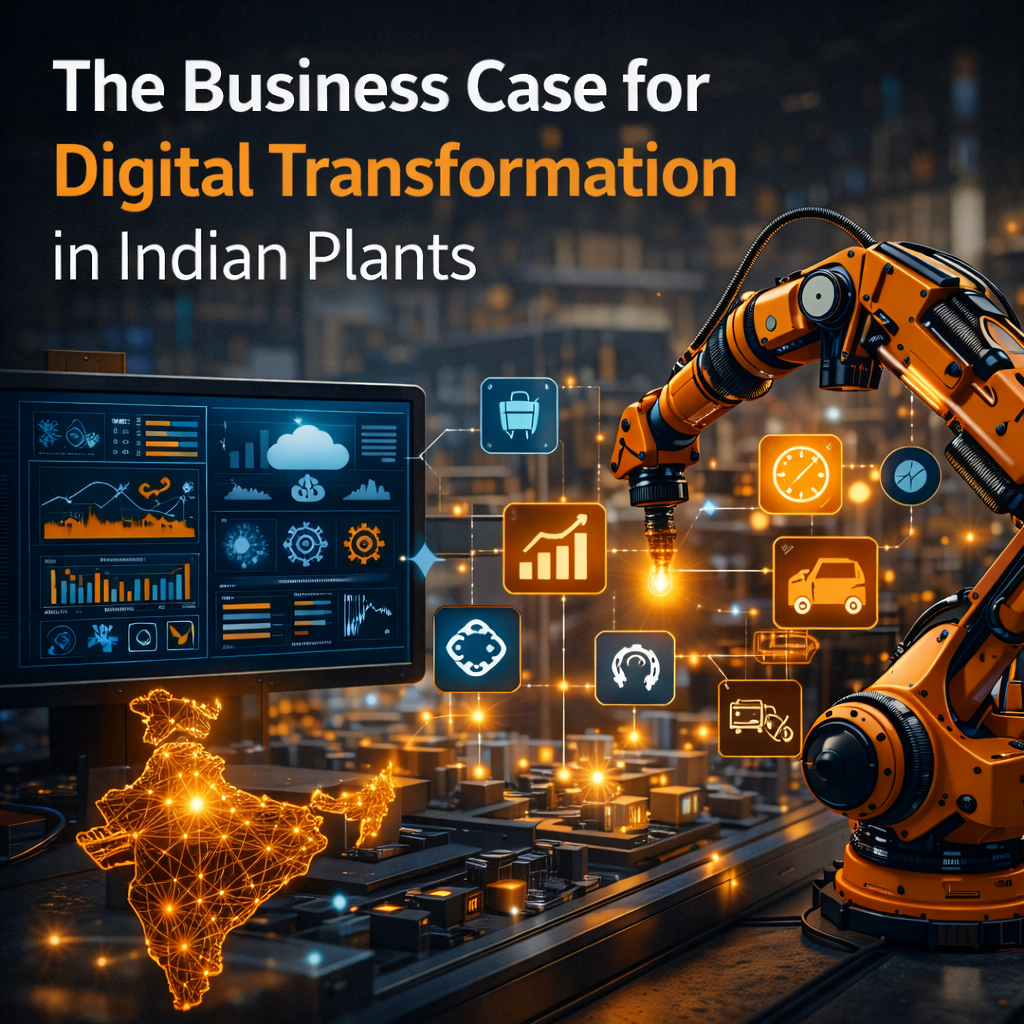
The Business Case for Digital Transformation in Indian Plants
India’s manufacturing sector is at a critical inflection point. As global competition intensifies and customer expectations evolve, traditional production models are no longer sufficient to sustain growth. To remain competitive, Indian plants must embrace digital transformation—the integration of advanced technologies such as Artificial Intelligence (AI), Industrial IoT (IIoT), cloud computing, and data analytics into manufacturing…
-
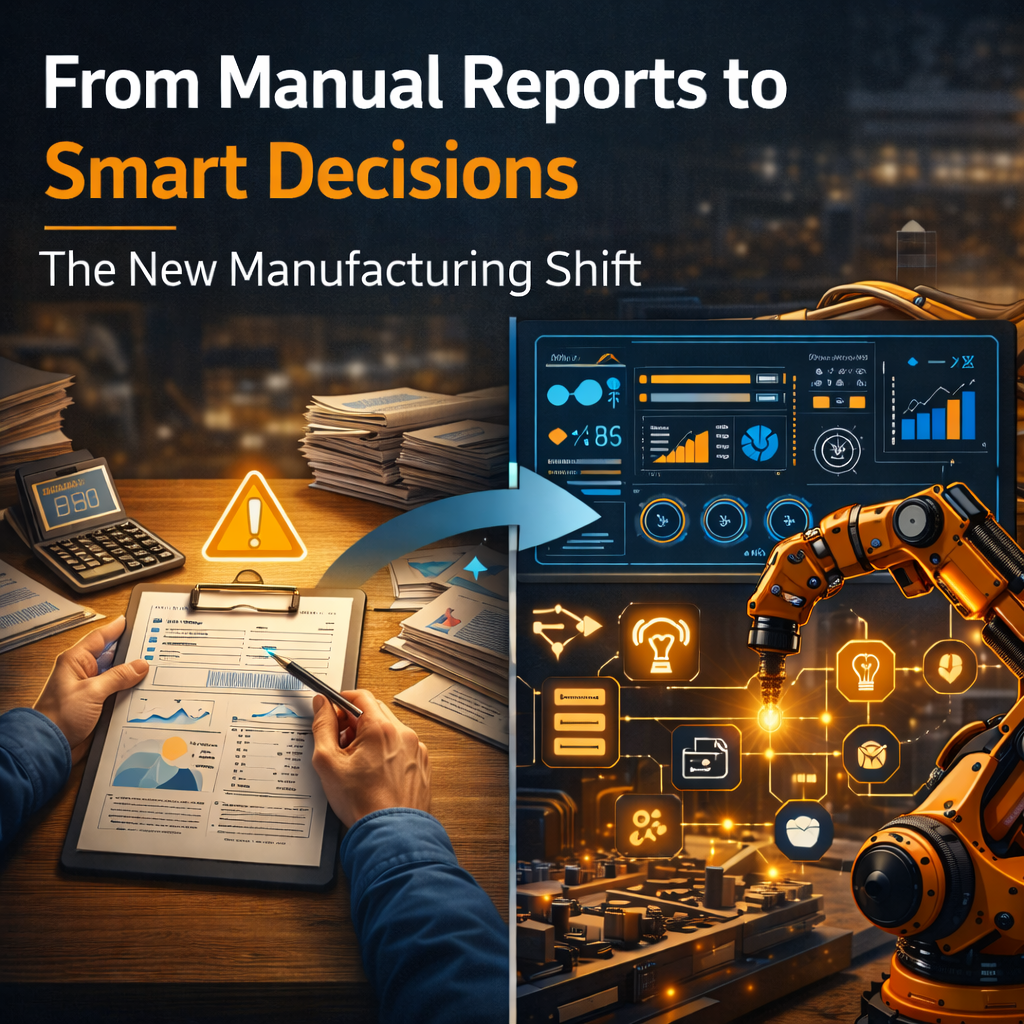
From Manual Reports to Smart Decisions: The New Manufacturing Shift
The manufacturing industry is undergoing a fundamental transformation. For decades, factories relied heavily on manual reporting—paper logs, spreadsheets, and delayed data entry—to track operations and performance. While these methods once served their purpose, they are no longer sufficient in today’s fast-paced, data-driven environment. The shift from manual reports to smart, real-time decision-making is redefining how…